It’s possible to suffer from both gout and diabetes at the same time. People with both gout and diabetes are advised to avoid foods that may affect the levels of uric acid and insulin in the body. Therefore, recommended diets for this group focus on lowering both uric acid and blood sugar levels.
Understanding Gout and Diabetes
1. Understand what causes gout. Gout – a form of arthritis – is a condition caused by the buildup of excess uric acid. Uric acid is a chemical produced during purine metabolism in the body. Purines are nitrogen-containing compounds that are produced inside the body or can be found in certain foods and drinks.
Gout occurs when urate crystals accumulate in the joints, causing intense pain and inflammation. Urate crystals can form when a person has high levels of uric acid in the blood.
Gout causes sudden, extreme attacks of pain, redness, and swelling. Gouty arthritis most often affects the big toe, but it also can occur in the ankles, feet, knees, wrists, and hands.
2. Know what causes diabetes. Diabetes is a disease that affects the body’s utilization of glucose – blood sugar that is the body’s source of energy. In order to use glucose, our body needs insulin. Insulin is a hormone that helps transport blood sugar or glucose into the cells as a source of energy. Without sufficient insulin, the blood sugar cannot be absorbed by the body’s cells and remains in the bloodstream. In people with diabetes, there is the inability of the body to produce insulin or the insulin does not work as it should.
Diabetes has two types:
Type 1 diabetes. The body’s immune system attacks and destroys the beta cells of the pancreas, which is responsible for the production of insulin.
Type 2 diabetes. The pancreas can still produce insulin but the body does not respond well to it, so the insulin doesn’t work.In both types of diabetes, the glucose cannot normally enter the cells and remains in the bloodstream, resulting in high levels of blood sugar.
3.Know the risk factors for both gout and diabetes. Gout and type 2 diabetes often occur together, as both diseases have common risk factors.
These include:
Non-modifiable Factors:
Age: As the body ages, its functions deteriorate. It may be unable to excrete uric acid any more which can lead to gout, or it may be unable to utilize insulin anymore, which can lead to diabetes.
Family history: Both gout and diabetes can be inherited. If one of your family members has gout or diabetes, then there is a chance that you may inherit the disease as well.
Gender: Both gout and diabetes more often occur in men than in women. This is because men have higher uric acid levels and are less sensitive to insulin.
Modifiable Factors:
Obesity: More adipose tissues from fats can produce and secrete more uric acid which can cause gout. Also, insulin does not easily bind to fats, which can increase a person’s risk of diabetes.
Diet and lifestyle: Excessive intake of alcohol can affect the body’s normal process of excreting uric acid, which can lead to gout. Also, alcohol can affect the body’s sensitivity to insulin which can lead to diabetes.
4. Recognize the symptoms of gout.
They include:
Joint pain and inflammation: This is caused by elevated deposits of crystallized uric acid in the joints. This uric acid may irritate the joints and lead to inflammation. The pain in the joint can be described as sharp or excruciating.
Kidney problems: Increased uric acid can cause kidney stone formation, which leads to problems with urination. The kidney stones may block urine passage.
5. Familiarize yourself with the symptoms of hypoglycemia. Diabetes symptoms occur when the blood sugar is below the normal range (hypoglycemia) or above the normal range (hyperglycemia). The normal range of blood sugar levels in the body is 70 to 110 mg/dl.
Signs and symptoms of hypoglycemia include:
Blurred or impaired vision: Due to low levels of glucose (which provides energy for the body) certain parts of the body, such as the eyes, become weak due to insufficient energy.
The confusion which may lead to delirium: Due to insufficient glucose, the vital organs such as the brain are not working properly.Extreme hunger leading to excessive eating: The body compensates for its lack of energy by releasing Ghrelin (the hunger hormone) which gives the person the urge to eat.
Extreme thirst leading to excessive drinking: When the body loses fluids because of frequent urination in diabetes, the body secretes vasopressin (also known as an antidiuretic hormone) which activates the thirst mechanism and stimulates the kidneys to reabsorb water. The person responds by drinking a lot of water in order to replace lost fluids.
Rapid or fast heartbeat: Because the body has no source of energy such as glucose, the heart compensates by speeding up the pumping of blood to the body’s vital organs.
Weakness or fatigue: Because the body does not have enough glucose, the sufferer may experience weakness and fatigue.
6. Recognize the signs and symptoms of hyperglycemia. When blood sugar levels go above the normal range, symptoms include:
Blurred or impaired vision: Abnormally high glucose levels in the blood can lead to swelling of the lens, which causes blurred vision.
The confusion which may lead to delirium: In hyperglycemia, although there may be a high level of blood glucose, it is not transported into the cells because of lack of insulin or insulin does not respond well to the body, so there is still no source of energy. The vital organs such as the brain don’t work properly due to insufficient energy.
Extreme thirst leading to excessive drinking: When the body loses fluids because of frequent urination in diabetes, the body secretes vasopressin which functions to activate the thirst mechanism and stimulate the kidneys to reabsorb water. The person responds by drinking a lot of water in order to replace lost fluids.
Frequent urination: With hyperglycemia, not all of the blood sugar can be reabsorbed and some of the excess blood glucose is secreted in the urine where it draws more water. The kidneys attempt to decrease blood glucose levels by excreting the excess blood glucose through the urine.
Headaches: In an attempt to get rid of the excess sugar, the body increases urine output. This increase in urination leads to dehydration and electrolyte imbalance that results in headaches.
Rapid or fast heartbeat: Because the body has no source of energy such as glucose, the heart compensates by speeding up the pumping of blood into the vital parts of the body.
Weakness or fatigue: Insufficient energy – due to the inability of glucose to be absorbed by the cells – leads to weakness and fatigue.
Sources and Citations: www.wikihow.com, Johnson, R., Nakagawa, T., 2013, Bupa’s Health Information Team, 2004, April,16 Moghul, S., 2013, June 23
INTRA 23 HERBS SOLUTION.
We believe that diabetes is an incurable disease and Intra cannot cure diabetes. On the other hand, long-term and regular use of Intra, together with the instructions of your attending physician, can bevery beneficial, as claimed by tens of thousands of satisfied clients in the 30 years that Intra has been on the market.
You have made your first step in building a successful business with Lifestyles. As such, it is an honour to send out this note of congratulations to you on your decision. We look forward to giving you the support you need on your journey to the top as you build, and grow a prosperous Lifestyles business and live better every day.
YOUR NEXT STEP TO SUCCESS
Now that you have joined the rank of a 20% Distributor you are now eligible for a promotion as a Direct Distributor. To qualify you need the following:
Personal Group Volume of 1,400 points
Concentrate now at building a intra herbal juice customer base network in you area ( and we will help You with international network):
Why?
Customers are the lifeblood of your Lifestyles Intra business, and that’s why I highly recommend you get good at finding, getting, and keeping customers.
TIP.
If Your enrol new Member and he is a new one – You will receive 8% Fast Track Bonus and 10-20% wholesale Bonus!!!
Remember.
“It ALL starts with a DECISION . “
Success in MLM starts with s DECISION to succeed. Most never make a decision. They instead, make a choice to TRY the business. That is how the average think and engage this MLM business. Make a Decision to Succeed- and you will.
Do You have the Vision?
“Your Heart MUST be Connected to the Vision you have. ”
Your HEART is the REAL POWER in MLM Success. It must be connected to the Dream that you have for your business. You can do anything you want in MLM that you set your mind to, as long as it is Powered by the HEART! People will hear your words, but FEEL your heart. Connect it to the Dream.
Do You have a questions?
Please contact sponsor or us, and learn how you can achieve the next level of success.
Congratulations again on your promotion!
Sincerely,
Tomas Ing. Cincala & Regina Cincala, NMD UPLINE
DISTRIBUTOR ID: 12499042, Tomas Ing.Cincala
DISTRIBUTOR ID: 13980442, Regina Cincalova
The Global Intra Team
Skype: cincala1
Tell Us how we can help You? We are grateful for the pleasure of serving you and meeting your Intra needs. Please use the Contact Form below for any questions you might have regarding Lifestyles products, we’ll respond to your e-mail within 24 hours!
Support the health of the arteries and promote normal blood flow
Good for the heart
Product quality:
BFAD approved, HALAL certified,GMP Certified,HACCP,Approved by Health Canada,Made in Canada, 31 years around the world
***All products are directly from Lifestyles Canada, not tampered, with expiry date, with lot no. guaranteed safe and effective.
With 31 years of manufacturing excellence and millions of satisfied customers worldwide, you can be confident in knowing that you are providing the best for your body.
_________________________________________
“Your Health – Your Most Valuable Asset!”
We give you results not only prevention.
We help people live better everyday.
Offices worldwide & ships to more than 41 countries.
We also offer COD/COP natiowide; also accept VISA, MC, Bank to Bank/ CC/Gcash Payments, Palawan, Cebuana, Mlluier etc.
Intra is a Food Supplement, not medicine, but… We have seen many of our customers improving their wealth and some of them daily supplement Intra, NutriaPLus, CardioLIfe and FiberLife in order to have healthy baby.Each individual will require balancing in a different way and so the effects can be expected to be different from person to person.
We strongly recommend long term usage of Intra and NutriaPlus and CL for couples, first three months try FiberLife too, in order to detox Your body…Please see FAQ Frequently Asked Questions and recommendations – click here.
These recommendations are for both – women and men. The supplements aren’t just for women – most of them affect a man’s sperm count, quality, and production, too!
TIPS to Boost Fertility
You shall change Your food habits ( balanced diet), add movement, positive thinking and let´s pray. Where are You living? Move out all toxic chemicals from Your home. And first, let Your body detox. No longer put garbage into Your body. Try to eat a lot of organic and natural food. The thing about the benefits of juicing and fresh juice( Intra can be part of ). It does wonderful things for our bodies. I know that if this worked for me, this can work for anyone. I am so happy and amazed. Please let us know, how are You doing…
Have Your daily servings of fruits and vegetables.
1. Folic acid is crucial for a healthy pregnancy because it produces DNA and protects the neural tube. Dr Glenville says women trying to get pregnant should take folic acid up to three months before conception – and she says men should take it too. “New evidence suggests that folic acid deficiency reduces fertility in men and may damage the DNA carried by sperm.” Buy Nature Made Folic Acid on Amazon. Proper folic acid levels are important for pregnancy and heart health.
2. Zinc is a supplement to boost fertility because it is vitally important for growth and proper cell division in a fetus. Zinc deficiency leads to reduced fertility, hormone imbalance, and increased risk of miscarriage. “Zinc is also needed for the proper development of sperm,” writes Dr. Glenville. “Research suggests that zinc deficiency in men causes a temporary but reversible reduction in sperm count and a reduced testosterone level; giving zinc to men with low testosterone levels increases sperm count.”
3. Selenium is a mineral that helps protect your body from free radical damage, which is very important for healthy cell division. Selenium deficiency in women has been linked to a higher risk of miscarriage. Selenium deficiency in men is associated with sperm that can’t move properly and are thus less likely to impregnate an egg. This fertility boosting supplement can make sperm more fertile.
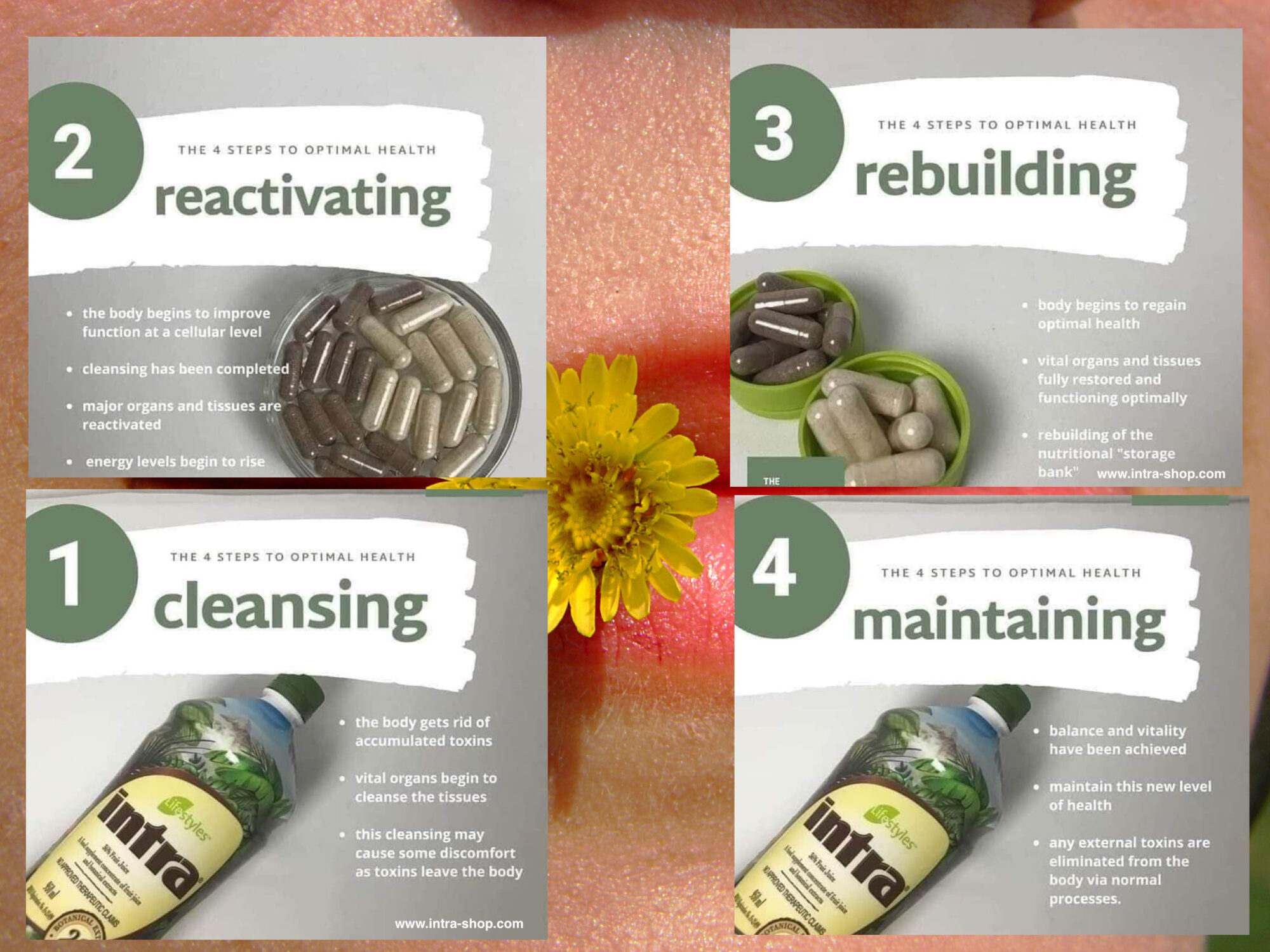
The 4 Steps To Optimal Health
4. Essential fatty acids can help you get pregnant faster because they regulate reproductive hormones and boost your baby’s brain, eye, and central nervous system development. The prostaglandins in essential fatty acids have hormone-like functions and can help prevent blood from clotting inappropriately, which can prevent the risk of miscarriage. Men who have sperm problems have lower than normal levels of beneficial prostaglandins.
5. Vitamins B6 and B12 are supplements that boost fertility because they help the development and maintenance of a healthy immune system, and for cellular reproduction (respectively). Vitamin B6 deficiency may result in poor immune function, hormone imbalances, and various other problems – and taking Vitamin B6 can help regulate periods and increase fertility. Vitamin B12 can reduce the risk of miscarriage and raise a low sperm count. Your body doesn’t store B12, so it’s important to eat foods that increase fertility levels.
6. Vitamin E can help you get pregnant because it may reduce age-related ovarian decline in women. This fertility boosting supplement helps combat free radicals, which can lower sperm count (and if you want to get pregnant faster, you need as high a sperm count as possible!). Plus, Vitamin E deficiency can result in anemia and irritability. Add Vitamin K too.
7. Red clover is an excellent fertility herb primarily due to the high amounts of calcium and magnesium. These two minerals are believed to be of high importance in affecting a woman’s ability to conceive. Red clover contains every single trace element needed by the glandular system. As such, this alkalizing herb is probably the single most effective plant used for balancing of the hormones needed for conception to take place. Balancing the body acid/alkaline PH, and thereby, the uterus PH, goes a long way toward favoring conception.
8. Red Raspberry leaves, particularly the wild kind, are very high in calcium. Like Nettle and Red Clover, Red Raspberry leaves serve as a soothing uterine tonic and hence a very effective fertility herb. The fertility promoting effects of Red Raspberry are enhanced in combination with other herbs, particularly Red Clover. Other fertility boosting supplements“: L-Arginine, L-Carnitine, Co-Enzyme Q10,
The Antioxidant Power Of Intra & NutriaPlus
On a standardized scale, the power of Intra and Nutria together produce an ORAC value of 56,406/L. ORAC stands for Oxygen Radical Absorbance Capacity and measures the power of an antioxidant based on its ability to neutralize free radicals. Higher ORAC levels equal stronger antioxidant capacity.
Intra is a very safe balanced formulation of 23 herbs, (food supplement), with no single herbal extract present at high levels. NutriaPlus contains antioxidants, Green Tea, Zinc, Selenium plus many more…
However, if you are taking medication or have any concerns, we encourage you to speak with your doctor before deciding to take Intra and NutriaPlus, CL, Fiberlife together.
NO, APPROVE THERAPEUTIC CLAIMS PRODUCT RESULTS.
Eating certain foods may help.
-Follow a Mediterranean diet. Add plenty of fresh and cooked green vegetables, fresh fruit, legumes, and fish to your plate.
-Antioxidants and Anti-Inflammatory agents: vitamin A( Lutein, Lycopene, beta carotene), B complex, B9 (folic acid), D3, Vitamin E, Glutathione, co-enzyme Q10, and pine bark extract
-Trace Elements: zinc and selenium
If any of these fertility nutrients were included in low quantities or left out altogether, points were lost on this subscore.
There are no ingredients found in Intra and NutriaPlus that would prohibit pregnant or nursing. Please drink not more than one ounce per day and listen to your body.
HOW TO SAVE UP TO 30%?
It has passed the test of time for safe use and effectiveness. Intra is a Great-Tasting, Fruit Juice-based Drink Suitable for All Ages.
NOTE:
Intra® was developed for this exact purpose using purified herbal extracts in relatively low dosage, balanced formulation. Many herbal experts recommend that high dosages of single herbs taken for only short periods of time. However, this does not apply with Intra Juice. Each individual will require balancing in a different way and so the effects can be expected to be different from person to person.
Klub Gruberteam.Pokud řešíte nějaký problém v práci, osobním životě, v rodině, doma, na zahradě, v kolektivu, nebo chcete jen zdravěji žit, případně se zdokonalit v nějaké činnosti nebo ovládnout určitou dovednost, jste zde správně. Just register without obligation. You will gain access to thousands of courses in various subject areas. Lecturers are professionals. Click here and register.
Nabízíme obrovské rozšíření témat kurzů! Jejich podstatné části jsou zdarma. Stačí se nezávazně registrovat na tomto odkazu – klikněte zde. Získáte přístup k tisícům kurzů různých tématických oblastí. Lektory jsou profesionálové. Jde o videokurzy – učíte se z pohodlí gauče doma nebo z pohodlí své židle v kanceláři. Témata jsou z každodenního života, vybere si opravdu každý. Pokud řešíte nějaký problém v práci, osobním životě, v rodině, doma, na zahradě, v kolektivu, nebo chcete zdravě žit, případně se zdokonalit nebo ovládnout nějakou dovednost , registrujte se zde (stačí zadat email) a začněte teď. Free Courses.
A toto vše výše uvedené je jen jedna desetina z nabídky. Je tam toho tedy ještě desetkrát více. Zde jsme vyjmenovali jen ty hodně navštěvované videokurzy. Velká část tamního vědění a umění je zdarma. I když zakoupit si nějaký kurz můžete – z něčeho ten web žít musí. Ceny jsou však podle mne více než solidní. Zapátrejte, budete příjemně překvapeni.
Avšak i při vašem čerpání podstatného know-how vás nikdo nebude k žádným platbám nutit.
Přímý přístup zkratkou na osvědčené grubrovské kurzové bestsellery (rychločtení, paměť, koncentrace, úspěch v práci, zvládnutí prokrastinace, efektivní studium, psychická pohoda…) je ZDE.
¨Přečtěte si něco o studiu cizích jazyků”
Slabší angličtina některých našich nových ministrů má snadné řešení
Poznámka: Text podobného obsahu vyšel dříve Davidu Gruberovi na jeho blogu idnes. Tam však bez důležitého odkazu.
Na internetu byl článek o slabší angličtině některých ministrů naší nové vlády. Více či méně kriticky se vyjadřoval o Janě Černochové (obrana), Zbyňku Stanjurovi (finance), Marianu Jurečkovi (práce a sociální věci) a Martinu Baxovi (kultura).
Počet diskusních příspěvků pod článkem za pár dnů dosáhl úctyhodného čísla nad 1200.
Diskutující se v drtivé většině případů rozčilovali, co to je za pořádek. Často celkem logicky uváděli, že na mezinárodní úrovni se ani tak moc nepočítají oficiální jednání, kde je na jemné nuance jazyka i pro pokročilé znalce angličtiny potřebný tlumočník; ale že rozhodující prestiž a vyjednávací výsledky vznikají v kuloárech, mezi čtyřma očima, z rodících se osobních vztahů mezi ministry téhož resortu různých zemí.
Kdo neumí anglicky, je negramotný
No a v civilizovaném světě se dnes už poměrně všeobecně uznává: Kdo neumí anglicky, je negramotný. Kdo umí anglicky polovičatě, je polonegramotný. No, když jste zahraniční politik – kamaraďte se na mezinárodních setkáních s českým ministerským kolegou, kujte spolu spojenecké pikle, když on je polonegramotný… Co si pomyslíte? „On/ona je určitě z nějaké zaostalé země, kde se lidé do ministerských křesel dostávají všelijak…“
Diskutující pod článkem tedy byli většinou destruktivní. Sice oprávněně a logicky, leč destruktivní. Málokdo však byl konstruktivní, tedy hledající a nalézající řešení. A nenašel jsem (přes docela podrobné procházení té diskuse) nikoho, opravdu NIKOHO, kdo by konkrétně upozornil na následující věci. Na které tedy zde upozorňuji já.
Ministr, a vlastně i poslanec, soudce a každý významnější státní úředník, by se měl doučit anglicky (nejméně na úroveň C1) RYCHLE. Měl by si najít způsob, jak se naučit mnohonásobně rychleji než je obvyklé – při současné velké pracovní vytíženosti, při velké zaneprázdněnosti, častém cestování…
In this article, we’re breaking down everything you should know about gout.
What is gout?
Gout is a type of arthritis. Small crystals form inside and around the joints, which can cause sudden, severe pain. There may also be some swelling.
Sometimes a gout attack may start suddenly, while at other times it can be caused by things such as:
A high temperature
Becoming dehydrated
Drinking too much alcohol
Eating a large meal with a lot of fat
Suffering an injury in a joint
Taking medicines for high blood pressure, or diuretics
A gout attack may last for days or weeks, but no matter how long it is, you should seek treatment as soon as you notice any of the symptoms listed below.
What are the symptoms of gout?
Sudden, severe pain in a joint.
Swollen red skin on and around the painful joint.
Hot skin on or around the joint.
Fingers, knees, ankles and toes are commonly affected, but any joint can experience symptoms of gout.
The length of time between gout attacks can be weeks, months or years. Most people with gout experience multiple flare-ups throughout the years. If someone gets lots of flare-ups, it’s known as chronic gout.
You may have an infection if:
The pain becomes even more severe.
You have a high temperature, but you’re shivering.
Contact your primary care provider if you have any of these symptoms. Getting treatment quickly can minimize any damage caused by the infection.
Who is likely to get gout?
People are more likely to get gout if they:
Are male and over the age of 30. Are overweight.
Drink excessive amounts of alcohol, particularly beer or spirits.
Eat excessive amounts of red meat or seafood.
Have one or more of the following health conditions:
Diabetes, High cholesterol, High blood pressure, Osteoarthritis
Problems with their kidneys, Have been through the menopause
Have family members who have gout (particularly close relatives)
Have had surgery, Have had a recent injury
Take diuretics or medication for high blood pressure
Gout is caused by the build-up of uric acid, which is a byproduct of purines in the blood. Your body gets rid of uric acid when you go to the bathroom. Both these substances are normal, but uric acid can build up in your blood if your body makes too much of it, or if your kidneys don’t function well. Uric acid forms tiny crystals in and around your joints if too much of it builds up. This is what causes the pain and swelling.
Does gout cause any complications?
There are a few possible complications of gout, some physical and some mental.
Joint damage
Perhaps unsurprising, considering how gout affects the joints, frequent flare-ups can lead to joint damage, especially if the gout goes untreated. If the damage is severe, you may need surgery.
Kidney stones
As well as leading to gout, high levels of uric acid can also cause kidney stones to form. Kidney stones are made of minerals and salts which have crystalized and stuck together to form hard deposits.
Kidney stones can make passing urine painful, and you may feel like you need to go to the bathroom more often. Other symptoms include severe pain in the side, back, lower abdomen and groin; blood in the urine; cloudy urine; nausea and vomiting.
Sometimes kidney stones can be passed naturally, which can be uncomfortable and even cause pain. At other times, surgery may be needed to remove them.
Tophi
Tophi are small, white lumps. They form under the skin, and are a result of the build-up of the crystals that form around your joints when you have gout. You’re more likely to get them if you suffer from chronic gout.
Tophi normally form around:
Ears
Elbows
Fingers
Forearms
Heels
Knees
Toes
Sometimes they can be painful, but not always. They may become inflamed and produce discharge, in which case they need to be treated. Inflamed or particularly large tophi may be surgically removed to prevent joint damage. Smaller tophi can be shrunk using a combination of medication and lifestyle changes, of which we’ll discuss more later.
Erosions
Gout can cause bone erosion. When parts of the bone have been eroded, your joint will typically have issues functioning correctly. You may need surgery to correct the issue. One study found that 44% of patients with gout also had bone erosions. Bone erosions were more likely to be seen in those who were older, had had gout for longer and had tophi present.
Anxiety or depression
The symptoms of gout can make it difficult to go about your everyday life. This, in turn, can affect your mood, and in more serious cases may lead to a mental health condition, such as an anxiety disorder or depression.
Anxiety and anxiety disorders
Anxiety is a normal emotion for us, where we might feel tense and worried. An anxiety disorder, on the other hand, involves more than temporary worry. According to the American Psychological Association, an anxiety disorder is characterized by “recurring intrusive thoughts or concerns. They [people with anxiety disorders] may avoid certain situations out of worry. They may also have physical symptoms such as sweating, trembling, dizziness, or a rapid heartbeat.”
Speak to your doctor if you notice:
You feel constantly on edge
You’re finding it difficult to concentrate
You feel restless and irritable
You’re isolating yourself from family and friends
You’re avoiding situations which make you feel anxious
They’ll be able to offer you support, such as referring you for talk therapy, which is also known as psychotherapy. Talk therapy is a way for patients to identify and discuss emotional issues with a mental health professional, as well as create strategies to deal with them. Research shows that talk therapy is one of the most effective ways to treat an anxiety disorder, but it can also be useful for those who need a safe, confidential space to talk about their feelings and worries.
Depression
The American Psychological Association defines depression as “extreme sadness or despair that lasts more than days. It interferes with the activities of daily life and can cause physical symptoms such as pain, weight loss or gain, sleeping pattern disruptions or lack of energy. People with depression may also experience an inability to concentrate, feelings of worthlessness or excessive guilt and recurrent thoughts of death or suicide.”
Speak to your doctor if you notice:
You feel sad or have a low mood for more than a few days
You feel hopeless
You have low self-esteem
You feel tearful
You feel guilty
You feel irritable
You lose motivation
You lose interest in activities that you usually enjoy
You’re indecisive
You have thoughts of harming yourself
You have suicidal thoughts
Get help from a medical professional as soon as possible if you have suicidal thoughts. You can call or text 988 to reach the 998 Suicide & Crisis Lifeline and receive emotional support. They also offer a chat service called Lifeline, and a Spanish-language phone line. All these services are free, confidential, and available 24/7.
Your doctor will be able to support you by referring you for talk therapy, where you can discuss your experience with a mental health professional. They may also prescribe antidepressants, a type of medication which reduces the symptoms of depression. There are many types of antidepressants available, so your doctor will prescribe one depending on what other medical conditions you have and which medications you already take.
How to treat gout
Can gout be cured? Gout is an incurable condition, but fortunately there are effective ways in which a doctor can treat the symptoms. While treatment is normally required throughout your life, it can sometimes be so effective that it prevents you from having any more gout attacks, as long as you continue to follow your program.
Seeing a doctor
It’s important to see your primary care provider if you have symptoms of gout. They’ll be able to refer you to someone who can diagnose it, or they may identify a condition which has similar symptoms (for example, infected joints). Either way, your doctor will be able to advise on the best treatment and management of your condition.
You can help your doctor by making note of the following before your appointment:
Your symptoms, when they started, and how often you experience them
Whether anything seems to trigger your symptoms
Any other medical conditions you have, and whether you’re taking an medications or supplements for them
Whether there’s history of gout in your family
Your typical diet and alcohol intake
Any recent changes in your life (for example, something that may cause extra stress)
Any questions you have for the doctor
This will help you remember everything you want to tell them.
You’ll likely be referred to a rheumatologist. Rheumatologists specialise in diagnosing and treating conditions (including gout) which affect the muscles, bones, joints, ligaments, and tendons. You can also find a rheumatologist using the American College of Rheumatology database.
The rheumatologist may:
Carry out a blood test to measure how much uric acid is in your blood.
Scan the affected joint(s). An ultrasound and dual-energy computerized tomography (DECT) can find urate crystals in joints, while X-rays are used to investigate other possible causes of joint inflammation.
Use a needle to take a sample of the fluid inside the joint so it can be tested for the amount of uric acid present.
Once you have a diagnosis, your primary care provider will be able to help you manage your gout.
If you’ve been diagnosed with gout
See your primary care provider if you have a gout flare-up and the medication you’ve been prescribed doesn’t start working within two days.
Treating gout
Gout can be treated and managed with medication. There are two types of medication: one reduces pain and inflammation, and one lowers the amount of uric acid in your blood.
Examples of gout medication which reduces pain inflammation:
Colchicine, such as Colcrys, Gloperba and Mitigare. It decreases swelling and the build-up of uric acid.
Corticosteroids, such as Prednisone. This type of medication reduces inflammation and can be given to you as pills or an injection.
Nonsteroidal anti-inflammatory drugs (NSAIDs). Some of these are available over the counter (Ibuprofen, Naproxen Sodium), while others are stronger and therefore only available on prescription (Indomethacin, Celecoxib). They reduce inflammation.
Examples of gout medication which lowers the amount of uric acid in the blood:
Allopurinol and Febuxostat, which both limit the amount of uric acid the body makes.
Probenecid, which improves the removal of uric acid from the body.
During a gout flare-up, there are things you can do to stay as comfortable as possible, including:
Take your medication as you’ve been instructed to. Some people find it helpful to store it in a dosette box, in which you can organise your pills by day (and sometimes by times within that day). This makes it easier to see whether you’ve taken what you need to.
Don’t put any pressure on the affected joint. Raise it if possible – for example, if the gout attack is in your knee then sit with your foot up.
Apply something cold to the affected joint, such as an ice pack or bag of frozen food wrapped in a towel. Keep your cold pack on the joint for up to 20 minutes at a time (any longer and you risk damaging the skin).
Try to keep your duvet off the affected joint when you go to bed, as this can apply unwanted pressure.
By seeking medical treatment, you can deal with the symptoms to relieve the pain and pressure of gout.
How to manage gout?
Gout can affect your daily activities. Luckily, self-management strategies can be used in conjunction with the medications previously mentioned to manage the condition, prevent flare-ups and improve your quality of life. For example, there are dietary and lifestyle changes you can make. Let’s look at some of these below.
Vegetables, including dark greens, red and yellow vegetables, beans, peas and lentils
Fruits of all types
Grains, especially whole grains
Dairy products, including low-fat milk, yogurt and cheese, or fortified dairy alternatives
Sources of protein, including lean meat, poultry, eggs, beans, peas, lentils, nuts and seeds
Oils, including vegetable oils
A healthy diet also limits the level of sugar, sodium and saturated fat consumed.
There are some foods it’s better for people with gout to avoid, as they may cause a flare-up. These include:
Red meat, such as beef, lamb and pork
Organ meat, such as kidneys and liver
Seafood, particularly anchovies, mussels, sardines, scallops, trout and tuna
These foods are high in purines. Purines cause the formation of uric acid when they break down in the blood, and too much uric acid can lead to gout.
One result of a healthy diet is weight loss, which can be beneficial for those with gout as it relieves pressure from the joints, especially the hips and knees.
Stay hydrated
Drinking plenty of fluids is important for humans for many reasons. Your body needs water in order to:
Get rid of waste
Regulate your temperature
Lubricate your joints
Protect tissues
Without water, your body can’t function properly. You’ll feel tired and dizzy, and may have a dry mouth and a headache.
Water is best for hydration, but other options include milk and herbal teas. If you prefer a little more flavour, you can add fruit like lemon or lime. But limit sweet drinks like soda, as these contain a lot of sugar.
There’s no clear answer on how much water you should drink each day, as it can vary depending on your health and activity levels. As a guide, the U.S. National Academies of Sciences, Engineering, and Medicine state the adequate amount of water per day is:
3.7 liters for men
2.7 liters for women
Limiting alcohol intake is also very important for gout sufferers, because alcohol is a source of purines. In particular, beer and hard liquor have large stores of purines. Studies have shown that alcohol can be a trigger for a gout flare-up, although lifestyle factors were more of an influence among those with early onset gout (i.e. those who were diagnosed with gout before the age of 40).
The Mayo Clinic recommends moderate alcohol intake, which they define as:
Up to one drink per day for women of all ages
Up to two drinks per day for men ages 65 and younger
Up to one drink per day for men older than 65
One drink is:
One 12-ounce (oz.) glass of beer with 5 percent alcohol by volume (ABV)
One 8- to 9-oz. glass of malt liquor with 7 percent ABV
One 5-oz. glass of wine with 12 percent ABV
One 1.5-oz. shot of distilled spirits with 40 percent ABV
It may seem counterintuitive to exercise when you have a condition that affects your joints, but physical activity is hugely beneficial to your overall health. It strengthens your bones and muscles, lowers blood pressure and cholesterol, reduces the risk of illnesses like heart disease and stroke, improves brain health and can help you do everyday activities more easily.
The key is to avoid exercise which puts a lot of pressure on your joints, and instead try low-impact activities. Walking, cycling and swimming are all good for anyone with joint issues for this reason.
Stay in touch with your doctor
Continue taking your medication
It may be tempting to stop taking medication if your symptoms have stopped. However, it’s important to keep taking it as directed, as the medication is what keeps uric acid levels at low enough levels to prevent a gout flare-up.
Your doctor will be able to help you follow your recommended treatment plan and answer any questions you might have, as well as monitoring your general health.
With careful management, people with gout can still lead full, active lives. Take action today to improve your quality of life and stay on top of your health and well-being.
Thank you for your interest in Lifestyles Intra Juice & Business Training for global team members. In keeping with our promise to support you in your business, we have launched our Training Pages online. Training programs of Lifestyles GN ( YOU have Training section in your PBC) and Lifestyles GN are improving, but you are still definitely expected to hit the ground with our basic guide on our System (YOUR SUCCESS), Wealth, Health and Compensation Plan (YOUR MONEY).
Please carefully read our Guide STEP 1 – STEP 8 on how to START your own online business and sell Intra Juice online 24/7 today. Just follow the guidelines. There is… the ‘LIFESTYLES INTRA GLOBAL TEAM’ can teach you how!
The Internet is changing the way people live and work forever. The ideas of traditional businesses as we know them are disappearing; making way for new methods of wealth creation and time freedom. Today, the speed and technology of the Internet have REVOLUTIONIZED the referral marketing industry, also known as Network Marketing or Multi-Level Marketing (MLM), making it possible to achieve financial freedom and more working part-time from the privacy of your own home with the great Online Business 24/7 globally. Learn how you could earn an extra $1,000, $5,000, or even $10,000+ per month PART TIME working from home. How can we be so sure? Because thousands are doing it! Because we are doing it and we work with you at each step, teaching you to do the same. It’s A Shame For You Not To Make Good Money When Other People Do It So Easily.
Did you ever drive by million-dollar homes and wonder how those people got to be so successful? (We did!) Didn’t you want to just go up and ring their doorbell and ask them how they became so wealthy? We wondered if they were just luckier or maybe worked harder, but we were amazed when we discovered the truth: THEY JUST KNOW MORE THAN US AND WORKED SMART. It’s all about knowledge and teamwork. Anyone that might be more successful than you just knows a little more. KNOWLEDGE IS POWER. All you have to do is learn. This web site is the doorway to your opportunity.
“When the student is ready, the personal $uccess mentor appears.”
Think Success! Think I – N – T – R – A
Singing is Healthy! Log in to your PBC and get Lifestyles Intra songs today.
There’s an increasing amount of evidence that singing releases endorphins, serotonin and dopamine – the ‘happy’ chemicals that boost your mood and make you feel good about yourself. … Singing also counts as an aerobic activity as it introduces more oxygen into the blood leading to better circulation – and a better mood.
Research has shown that singing can be good for you on many levels. It may help lower stress, boost immunity and lung function, enhance memory, improve mental health, and help you cope with physical and emotional pain.
100% money-back guarantee on a 30 day supply per person. Free Returns
Pay conveniently with Cash on Delivery, Credit Card (VISA, Mastercard, American Express, Diners Club), Paypal, Cash in Advance, Direct Debit, Invoice, or Instant Bank Transfer.
Make sure to include 33 YEARS to help us celebrate Intra’s 33th birthday!! We want you to be part of the celebrations!!
So make sure to join us, as we celebrate 30 Years of Intra!!
Drink Intra!! Share Intra!! PASS IT ON!! I INTRA!!
This Holiday season, give the gift of HEALTH!! Share Lifestyles products with everyone!! You can feel confident you are providing the BEST for your body!!
Best of all… ONLINE SHOPPING CART IS ALWAYS OPEN
Start Your Home Business with Lifestyles online shopping cart is always open: 24 hours a day!! 7 days a week!! 365 days a year!! Create Your MYINTRASITE WEB Today. Join us.
Purchase all your favourite Lifestyles products anytime you want!!
The Lifestyles product line has something for everyone!!
Lifestyles Intra and Lifestyles Products are only available through Independent Distributors and are NOT sold in stores. Please visit the Lifestyles Intra Shop to purchase Intra and other Lifestyles products online. Please Select your Location for Pricing and Ordering.
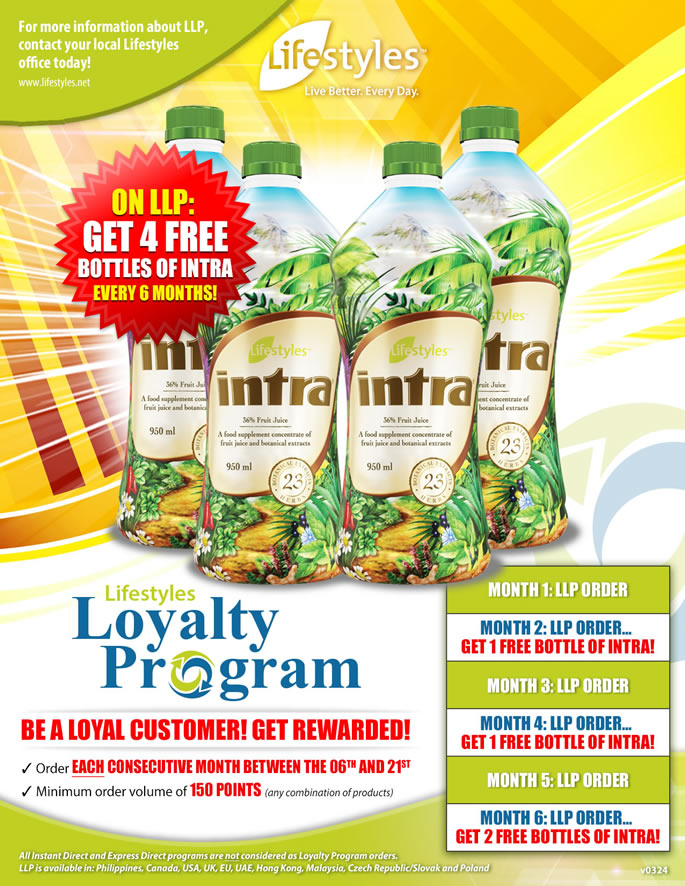
Plus get up to 8 Free bottle of Intra with ourLoyalty Customer Program. See buying options & discounts for Lifestyles Intra for for Lifestyles Intra Hispania.
Plus get up to 8 Free bottle of Intra with ourLoyalty Customer Program. See buying options & discounts for Lifestyles Intra for for Lifestyles Intra Canada.
Click here to see buying options for Intra in Thailand
Taiwan / South Korea
Click here to see buying options for Intra in Vitenam
Click here to see buying options for Intra in
PRICES
Please Select your FLAG & Location for Pricing.
Estonia, Lithuania, Latvia, – Lifestyles do have offices in these countries but they are not hooked up to the Lifestyles online store or enrol system. Please conact Us for more details and state the nature of your enquiry so that we can have your local company representative contact you with more details.
Estonia, Lithuania, Latvia, Ukraina, Russia – Lifestyles do have offices in these countries but they are not hooked up to the Lifestyles online store or enrol system. Please conact Us for more details and state the nature of your enquiry so that we can have your local company representative contact you with more details.
Visit the Lifestyles Intra Shop to purchase Intra and other Lifestyles products online.
Lifestyles Intra and Lifestyles Products are only available through Independent Distributors and are NOT sold in stores. Please visit the Lifestyles Intra Shop to purchase Intra and other Lifestyles products online.
Please click on the button below to become an Prefered Customer (10%-25% discount, no fee) or buy at wholesale ( up 40% discount, You shall pay Fee).
Lifestyles intra herbal juice is backed by a comprehensive, no nonsense guarantee. The customer simply returns the unused portion in the original carton to the Distributor who sold him or her the product within 30 days of the date of purchase.
Manage Consent
To provide the best experiences, we use technologies like cookies to store and/or access device information. Consenting to these technologies will allow us to process data such as browsing behavior or unique IDs on this site. Not consenting or withdrawing consent, may adversely affect certain features and functions.
Functional
Always active
The technical storage or access is strictly necessary for the legitimate purpose of enabling the use of a specific service explicitly requested by the subscriber or user, or for the sole purpose of carrying out the transmission of a communication over an electronic communications network.
Preferences
The technical storage or access is necessary for the legitimate purpose of storing preferences that are not requested by the subscriber or user.
Statistics
The technical storage or access that is used exclusively for statistical purposes.The technical storage or access that is used exclusively for anonymous statistical purposes. Without a subpoena, voluntary compliance on the part of your Internet Service Provider, or additional records from a third party, information stored or retrieved for this purpose alone cannot usually be used to identify you.
Marketing
The technical storage or access is required to create user profiles to send advertising, or to track the user on a website or across several websites for similar marketing purposes.



 TIP.
TIP.