
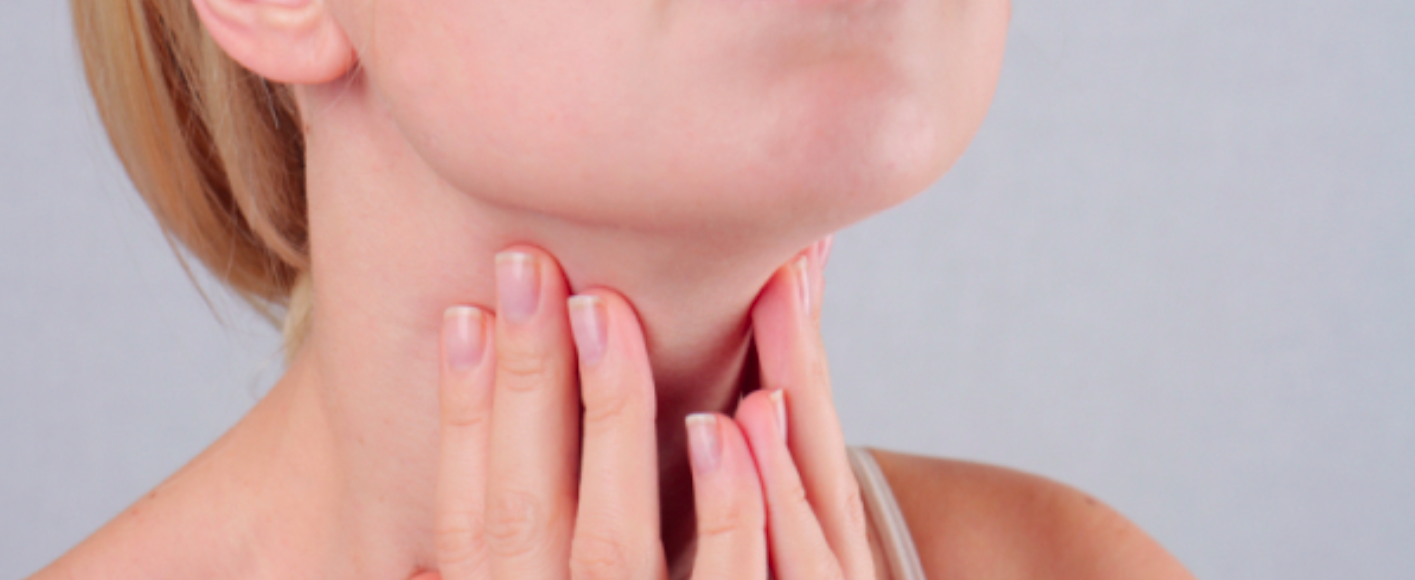
The thyroid gland is a small, inconspicuous organ that plays a vital role in maintaining your physical and mental health. The thyroid gland controls almost every cell in the body. Getting your thyroid checked early can save your life.
Approximately 200 million people worldwide suffer from some form of thyroid disease. The two most common are hypothyroidism (reduced activity of the thyroid gland) and hyperthyroidism (excessive activity of the thyroid gland), with women, affected ten times more often than men.

About 15% of women develop thyroid problems during their lifetime. Difficulties very often come with pregnancy or during menopause.
The most common condition worldwide is hypothyroidism, symptoms of which usually include fatigue, feeling cold, muscle weakness, and unexplained weight gain. In reality, however, the consequences are even more serious.
“The thyroid gland controls almost every cell in the human body,” points out Cindy Samet, a professor of chemistry at Dickinson College in Pennsylvania, who studies thyroid issues. “The thyroid gland can be said to be the main metabolic control center of the body. Brain, heart, and kidney function, as well as body temperature, growth, and muscle strength (and much more), are all at the mercy of thyroid function.”
The number of sick people is increasing.
The symptoms are alleviated by the mandatory iodization of edible salt in some countries, and therefore we no longer see goiter, which was a visible sign of problems with the thyroid gland.
How does the disease manifest itself?
Increased activity of the thyroid gland is accompanied by, for example, increased heart activity, high blood pressure, fatigue, weight loss, and psychological changes. But reduced activity doesn’t have to be so alarming. It manifests itself in fatigue, chills, swelling, shortness of breath, apathy, constipation, and sometimes joint pain, which many women (for example, during pregnancy or menopause) easily mistake for difficulties related to their condition and do not seek medical attention.
For example, according to the American Endocrinological Association, 60 percent of people with thyroid disease are unaware of their condition.
The number of patients with thyroid disease is increasing very rapidly. This is due both to the increase in the incidence of autoimmune diseases in the population and to the improvement and availability of diagnostics. Laboratory determination of thyroid hormone levels is today a basic and commonly available examination even in general practitioners’ clinics. A large proportion of patients with thyroid disease are detected as part of other tests, not for thyroid problems. In children, it is often an immunological examination due to repeated respiratory diseases, in adults, the finding on the thyroid gland is detected during an ultrasound examination of the vessels in the neck.
There are many causes of the disease.
The most common cause of thyroid disease is an autoimmune process that damages the thyroid gland and it can lead to a malfunction of the thyroid gland, to a change in its size or structure.
Why the number of autoimmune diseases, including the involvement of endocrine glands, is increasing so much is another complicated question. Once common in the past, hypothyroidism due to iodine deficiency is now a rare disease with widespread iodization of salt and is more likely to be a mild disorder in vegans or breastfeeding women. Even foods with a high “Strumigen content” (cabbage, horseradish) in large quantities can lead to reduced thyroid function.
Irradiation of the thyroid gland with radioactive radiation (external or radioiodine) is clearly a risk factor for the development of both reduced thyroid function and the most significant risk factor for the development of malignant tumors of the thyroid gland (irradiation of the neck for malignant tumors). Chemical substances in our environment also affect endocrine processes in the human body (lithium, phthalates). We still don’t know much about the cause of many other endocrine diseases.

Chronic stress also often affects the reduced function of the thyroid gland. Therefore, daily exercise and maintaining healthy relationships are also often recommended by experts, as both can also help the thyroid gland. Rest and at least seven hours of sleep are also important. But the thyroid gland is erratic. Her problems can negatively affect sleep. Depression, mood swings, and impaired ability to learn new things and to think in general are also frequent results.
It is not uncommon for people with hypothyroidism to end up in psychiatry. And it’s up to the doctor’s discretion whether to think of a possible thyroid connection. According to Medical News Today, hypothyroidism can also be responsible for anxiety, memory lapses, speech problems, and the development of so-called. pseudodementia. The paper states that 30-40 percent of sufferers suffer from an anxiety disorder at the same time.
What vitamins for the thyroid?
Thyroid inflammation is an autoimmune disease. As supportive therapy, it is advisable to take some of the vitamins whose levels decrease during this disease – selenium, zinc, antioxidants vitamin C, E, or omega-3 fatty acids. They reduce the formation of free radicals and thus prevent the development of inflammatory processes.

Limit the foods that are most harmful to the thyroid gland: Coffee.Sugar.Fried meals.Cruciferous vegetables.Gluten.Soya
Did you know that?
- Thyroid disease or its treatment is never the main cause of obesity.
- Thyroid disorders can develop over many years. An individual can live with the disease for a long time without realizing that the disorder affects them. Advanced is better recognized but more difficult to treat. Therefore, it is necessary to detect the disease at the earliest possible stage.
- Pregnant and lactating women who have thyroid disease can take iodine. Only rarely do doctors not recommend iodine for women with Graves-Basedow disease or nodules.
- After thyroid surgery and radioiodine, lifelong follow-up and usually lifelong thyroxine therapy are required.
- A puncture of the thyroid gland is a painless examination because a thinner needle is used and the puncture takes a few seconds.
- Examination – a puncture of the thyroid gland can lead to a rapid diagnosis and improve the prognosis of patients.
- In stabilized patients with hypothyroidism, the dose of thyroxine is the same throughout the year – it does not make sense to adjust doses depending on the time of year.
- If the Thyroid surgery operation is performed in a workplace with sufficient experience, it has a minimum of complications.
- If thyroid disease is treated correctly, the symptoms of hyper- or hypothyroidism will gradually disappear, although this can sometimes take several months.
- A rich source of iodine, for example, is the seaweed Kelp ( Fucus vesiculosus) – you can add it to food or take its extract in tablets. Iodine is naturally also found in marine fish.
TIP. Try Nutria Plus. Nutria Plus contains selenium, which is found in organic form in this product. This is because it is highly absorbable and usable by the body. Selenium, like iodine, is an important substance for the proper functioning of the thyroid gland. Best together with INTRA HERBAL JUICE.
Source and pictures: https://en.wikipedia.org/, Lifestyles Independent Distributors, www.google.com, www.yahoo.com, youtube.com, Lifestyles magazine Flowers

Nodule Control: Ingredients
The following is a complete breakdown of the active ingredients found in Nodule Control. It includes their relevance to thyroid disease, mechanisms of action, and a review of supportive research.

Selenium
A recent clinical trials
In a recent clinical trial, the combination of inositol and selenium was tested for its ability to reduce the mass of thyroid nodules. A total of 642 patients were evaluated for nodules. The average age of the patients was 41 and roughly 90% were female. Of them, 333 were randomly assigned to treatment with inositol and selenium or usual therapy.
Selenium is essential for nearly all facets of thyroid function including iodine regulation, cell proliferation, and regulation of free radicals within thyroid follicles.
Inositol
Inositol is a natural occurring sugar that is a conditionally essential nutrient. It has been shown to help regulate cell proliferation, morphogenesis, and glucose regulation
Spirulina
Spirulina is a rich source of the antioxidant superoxide dismutase (SOD) which is one of the endogenous antioxidants that allows for normal thyroid cell replication.
The thyroid cells are exposed to high amounts of free radical damage from the formation of iodine and its attachment to thyroglobulin.
Unchecked free radical formation can lead to DNA damage that can result in the abnormal cell growth behind nodule formation and thyroid cancer.
Boswellia
Boswellia is a tree resin with antiinflammatory effects which block NFkB pathways and normalize the activity of regulatory and effector T cells.
Turmeric
Turmeric has been shown to benefit oxidative pathways involved with nodule formation such as IL-6, hs-CRP, and MDA.
In a double blinded human clinical trial, the combination of spirulina, boswellia, and turmeric was tested for its ability to reduce thyroid nodules.
In the study, adult patients with thyroid nodules were given a combination of the three nutrients or a placebo over the period of 6 weeks. Thyroid ultrasounds to evaluate nodule size were performed at the beginning of the study, after 6 weeks, and after 12 weeks.
Of those taking the nutrient combination, over 85% showed a significant decrease to the size of their thyroid nodules. The average reduction in nodule size for those on the active treatment ranged from 0.6 to 0.9 cm2.
It was noted that the results are especially significant in light of the fact that the supplements were only administered for the first half of the study. They might have been even more pronounced had they been taken for the full 12 weeks.
Source: drchristianson.com, google.com, wikopedia.com
